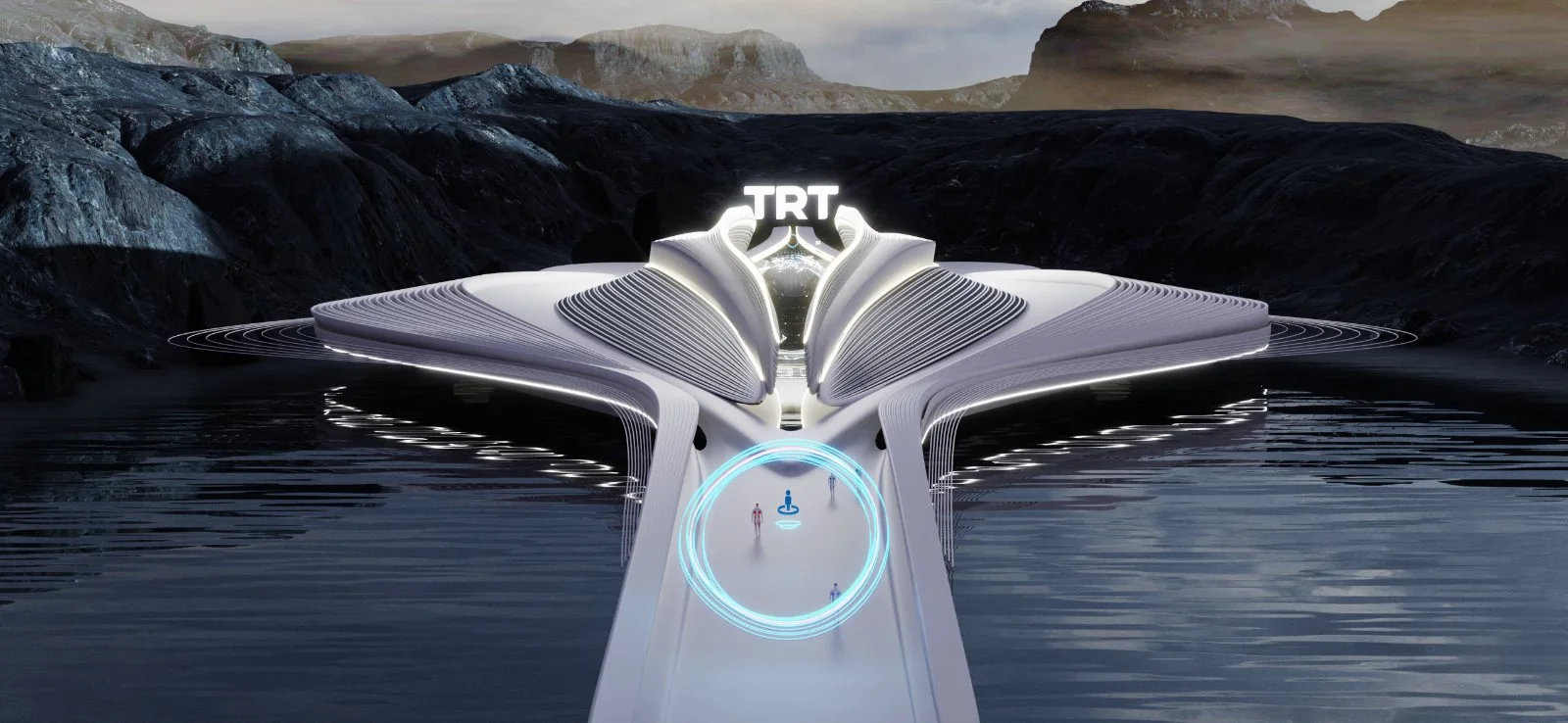
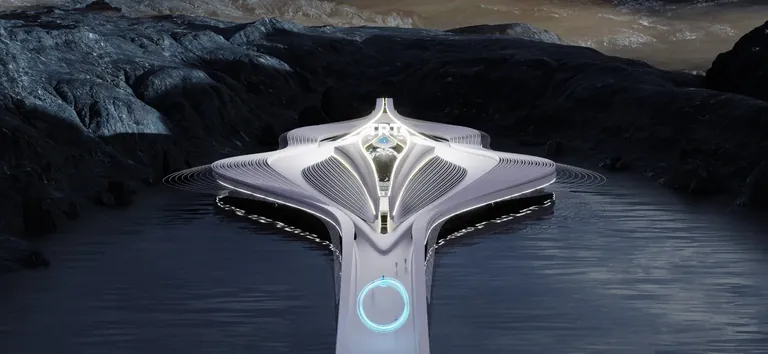
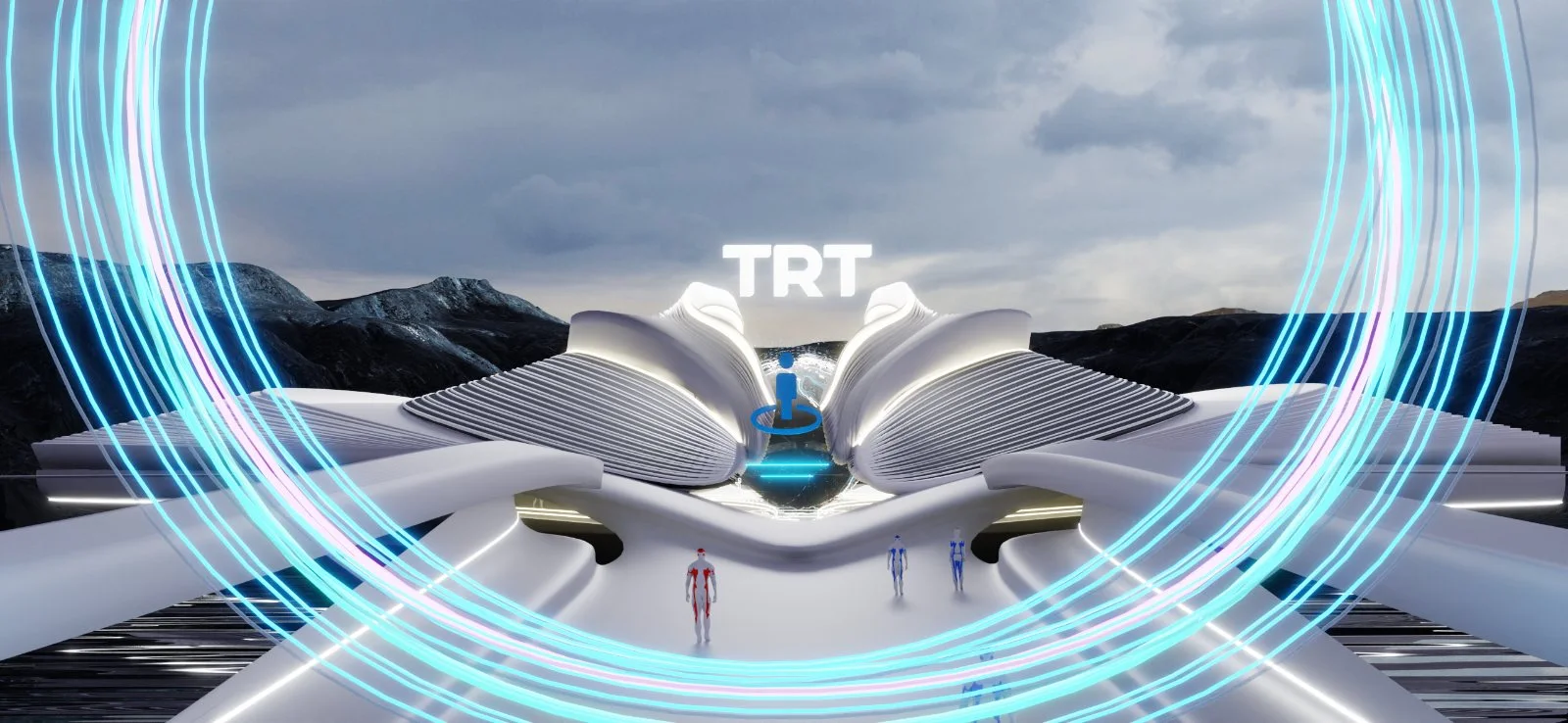
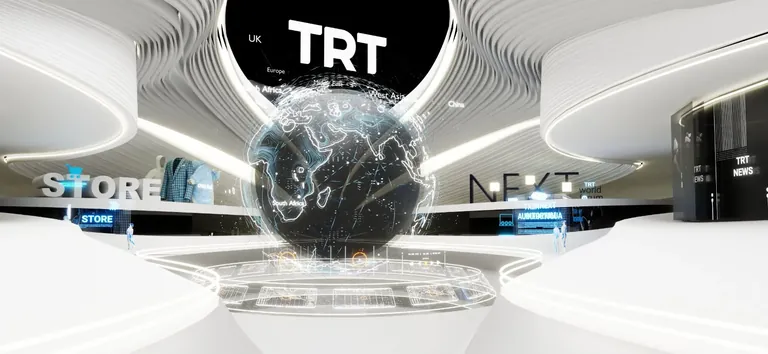
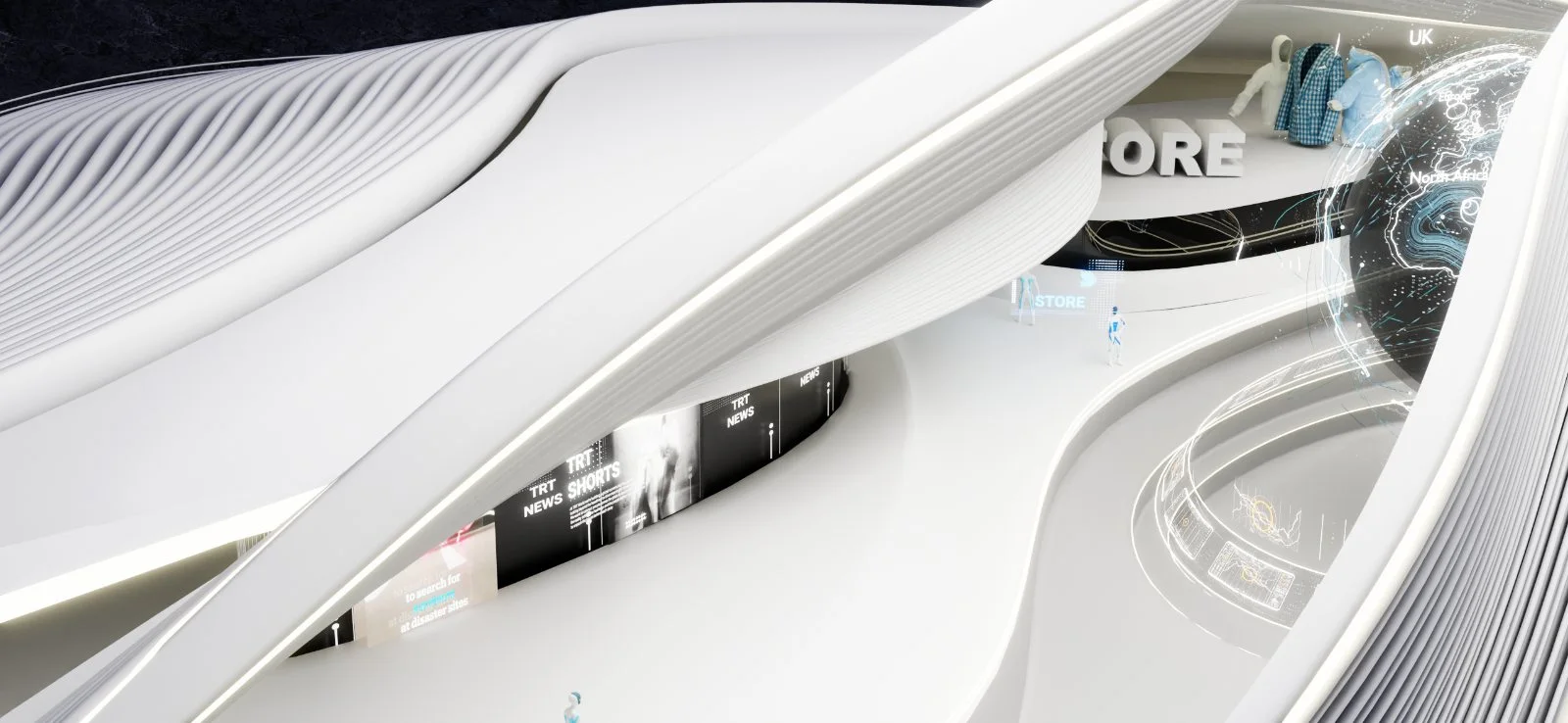
The main space, from the air01
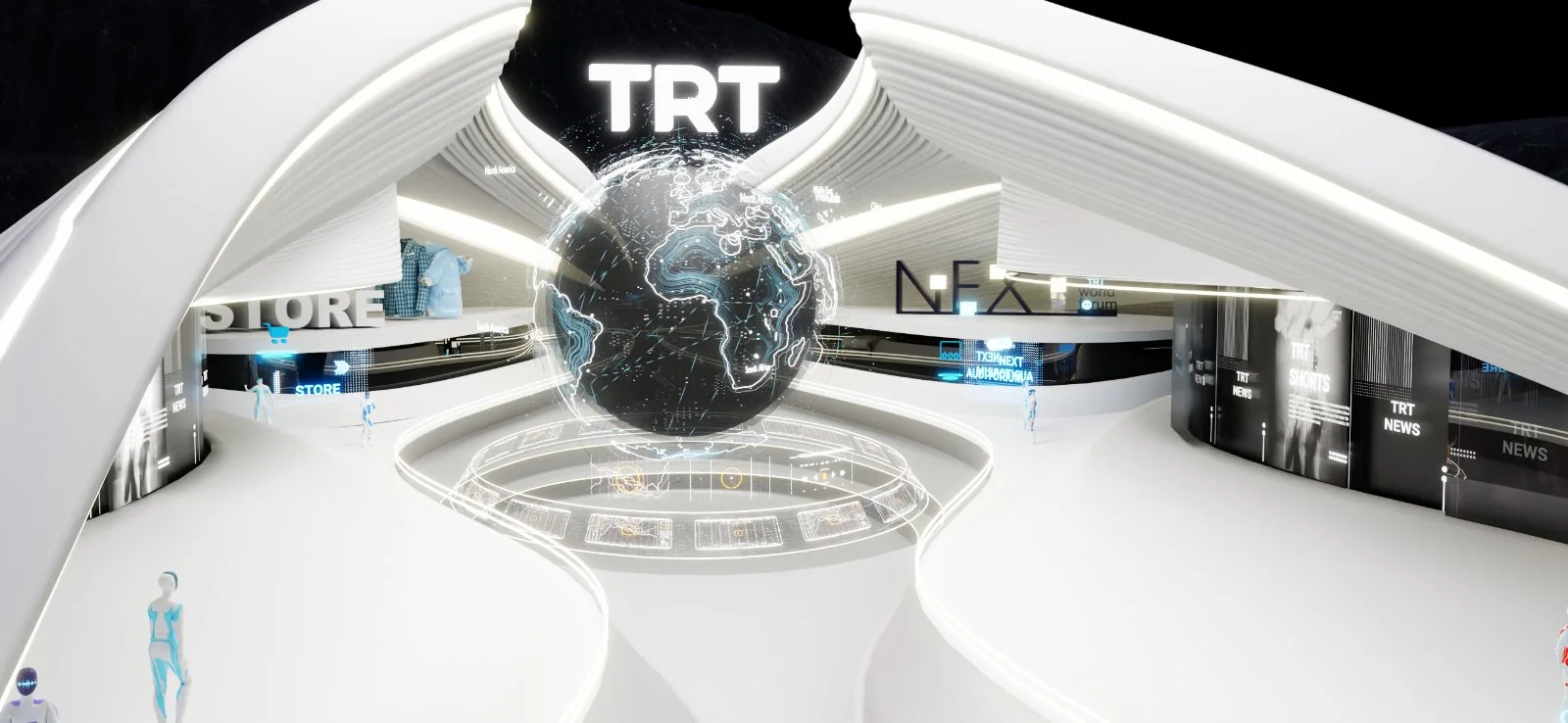
ILLUSORR designed TRT's first immersive metaverse environment, reimagining the role of a global broadcaster in virtual space. One main space that expands into a space per channel, where audiences explore programming, cultural initiatives and live broadcasts at full scale.
TRT published the collaboration itself. The launch ran on TRT World and TRT Arabi, and the Turkish trade press covered it as a first for the market: a national broadcaster commissioning a purpose-built metaverse rather than renting a plot in someone else’s.
That mattered for the design. The environment had to survive being written about, screenshotted and broadcast, not just walked through.
The broadcaster’s own report on the launch of its virtual environment.
Read on TRT WorldTRT World’s companion piece from the metaverse and broadcasting forum where the space was shown.
Read the reportTrade coverage of the commission and what it signalled for Turkish media.
Read in TurkishThe space was not launched in a press release. TRT convened an international forum on the metaverse and broadcasting in Istanbul and gave the design a panel, so the argument was made in the room, in front of the people who would have to run it.
The reveal film runs the whole approach in order: the arrival, the broadcast floor, the channel spaces, and the characters who live in them.
 Watch the reveal
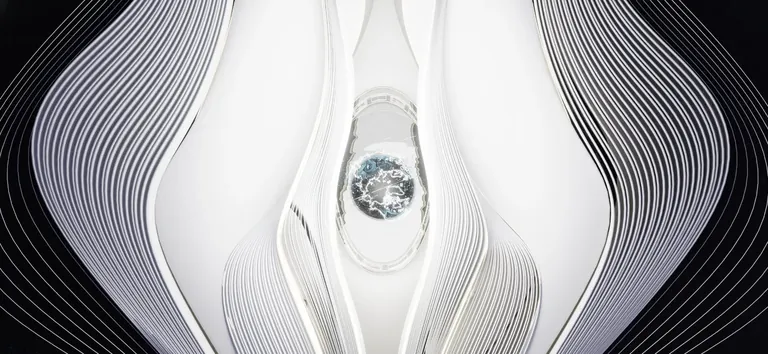
ILLUSORR designed the main TRT space first, and designed it as a host. Four arms reach out from a central broadcast core, each arm ending in an open edge rather than a wall, so a new space can be attached without touching what already works.
The geometry does the arguing. A rectangular plan can be extended twice before it reads as a corridor. This one grows in six directions and stays legible from above, which is how a broadcaster with more than a dozen channels can keep expanding without a redesign.
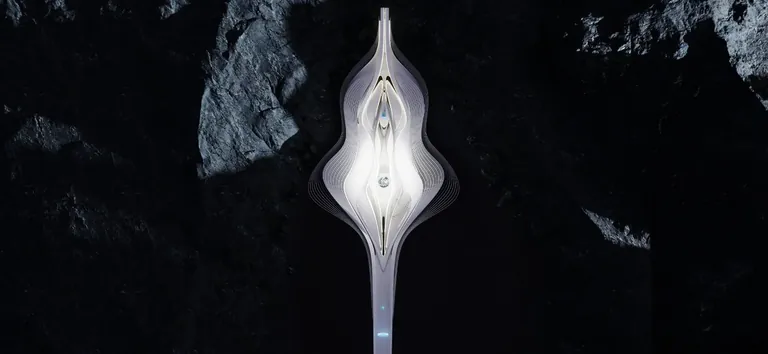
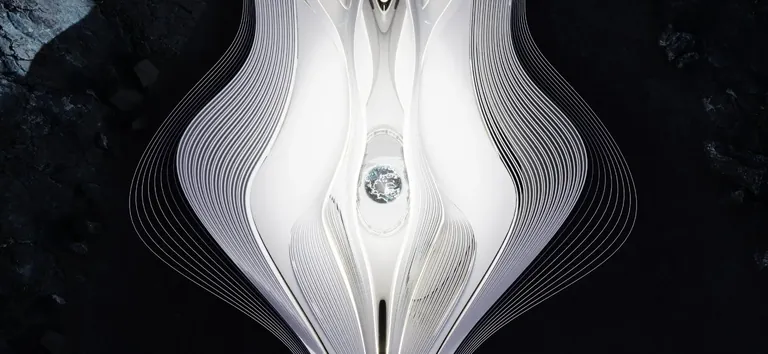
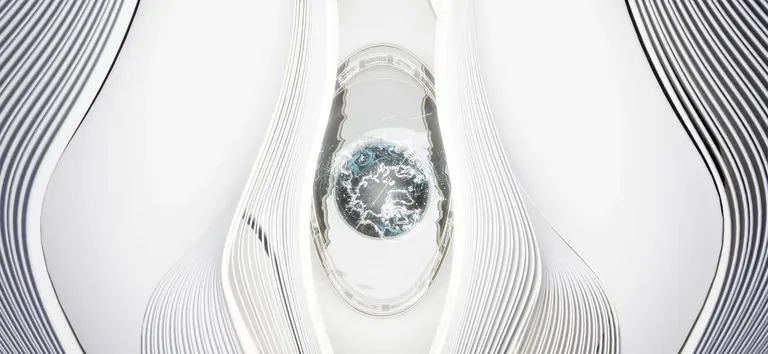
Every space in the world does two jobs. It carries a function TRT already performs, so staff recognise it and can run it on day one. Then it does the thing the physical version cannot: change scale, change language, change lighting state, or hold an audience that would not fit in a building.
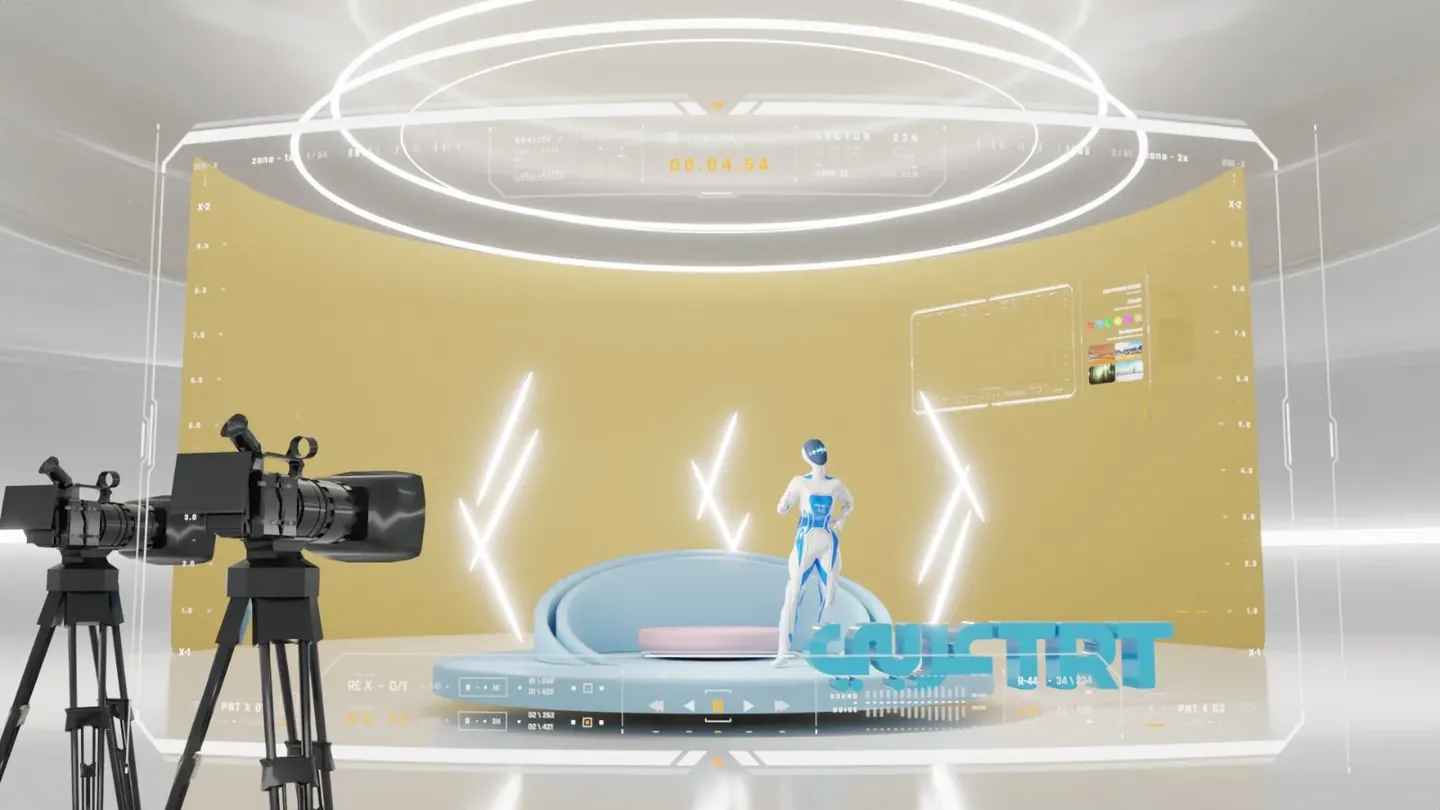
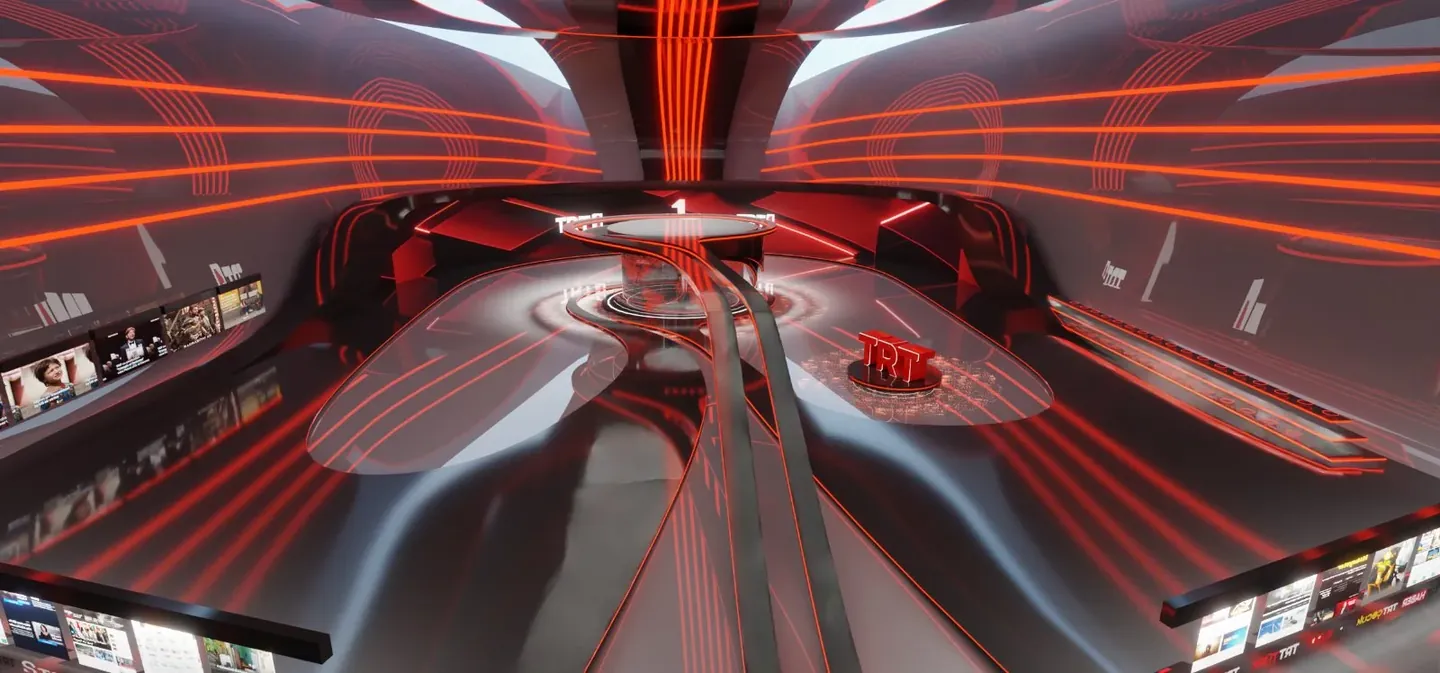
A working studio: desk, gallery, running order. In world the same floor drops its ceiling, wraps the feed around the full 360, and lets the audience stand inside the set instead of watching it through a frame.
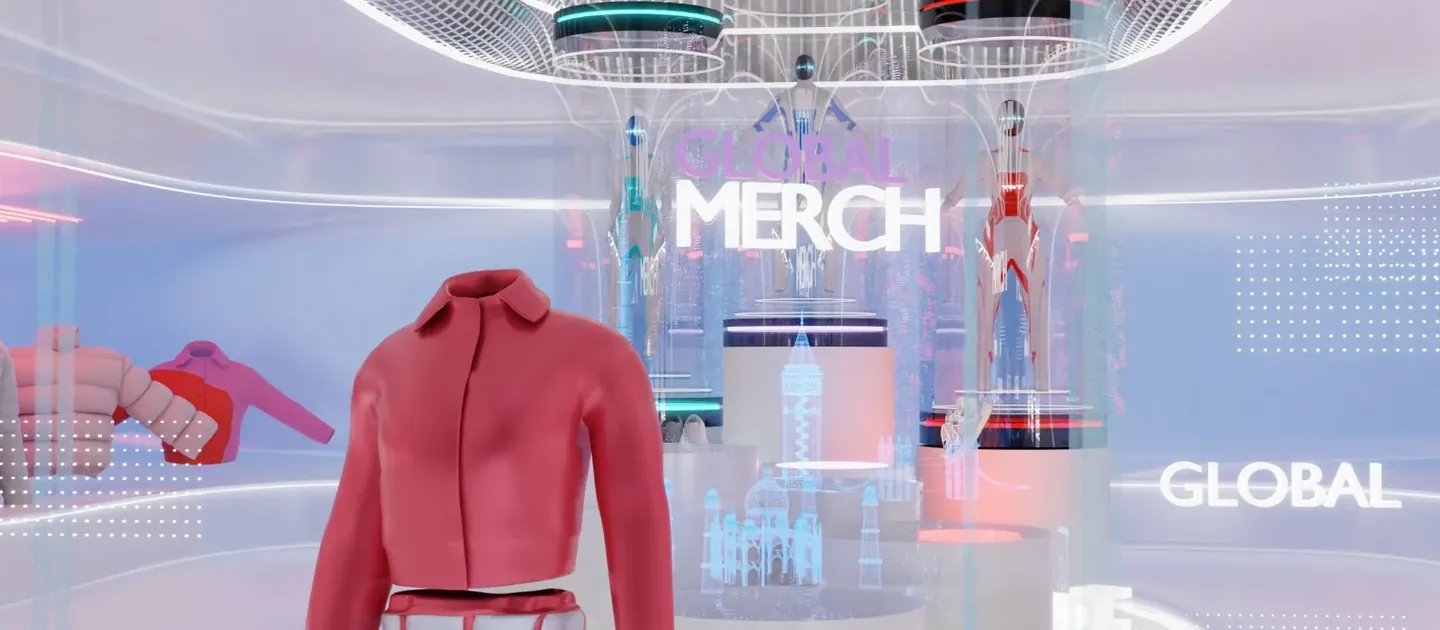
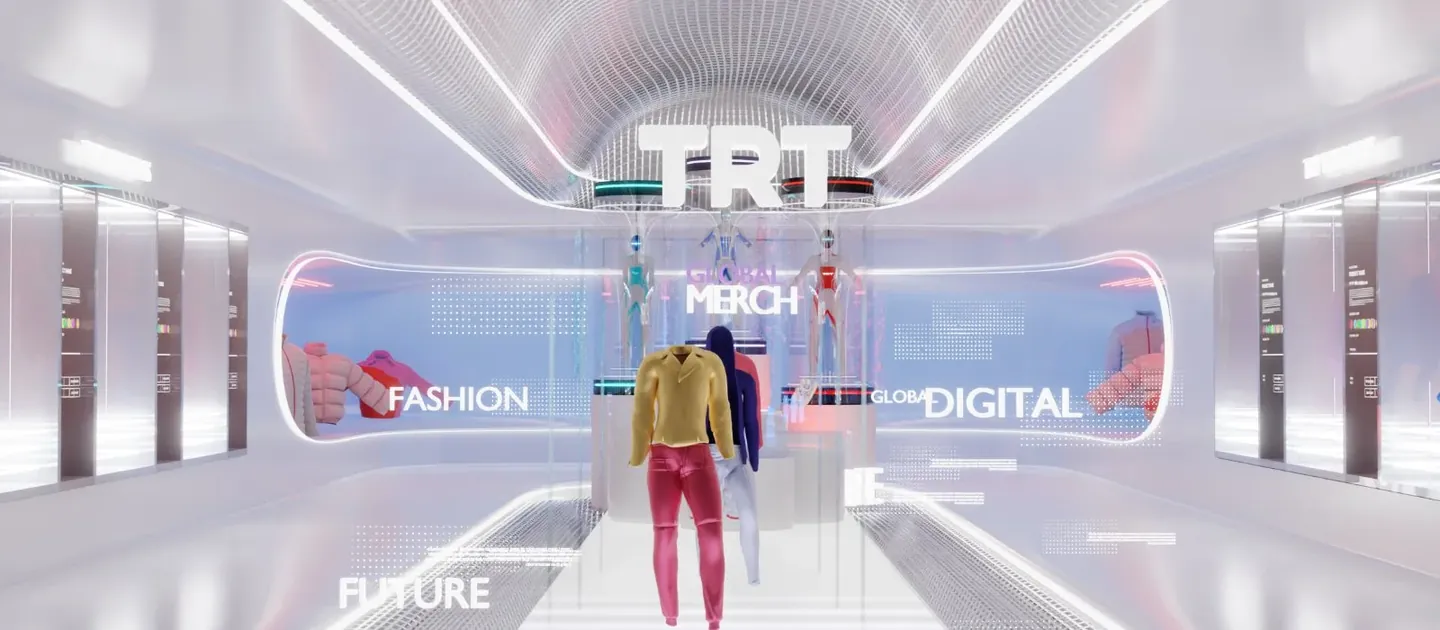
A retail counter that behaves like one, with stock, prices and a queue. Then the stock becomes wearable, the shelf becomes infinite, and a character from a series can be standing next to the thing it comes from.
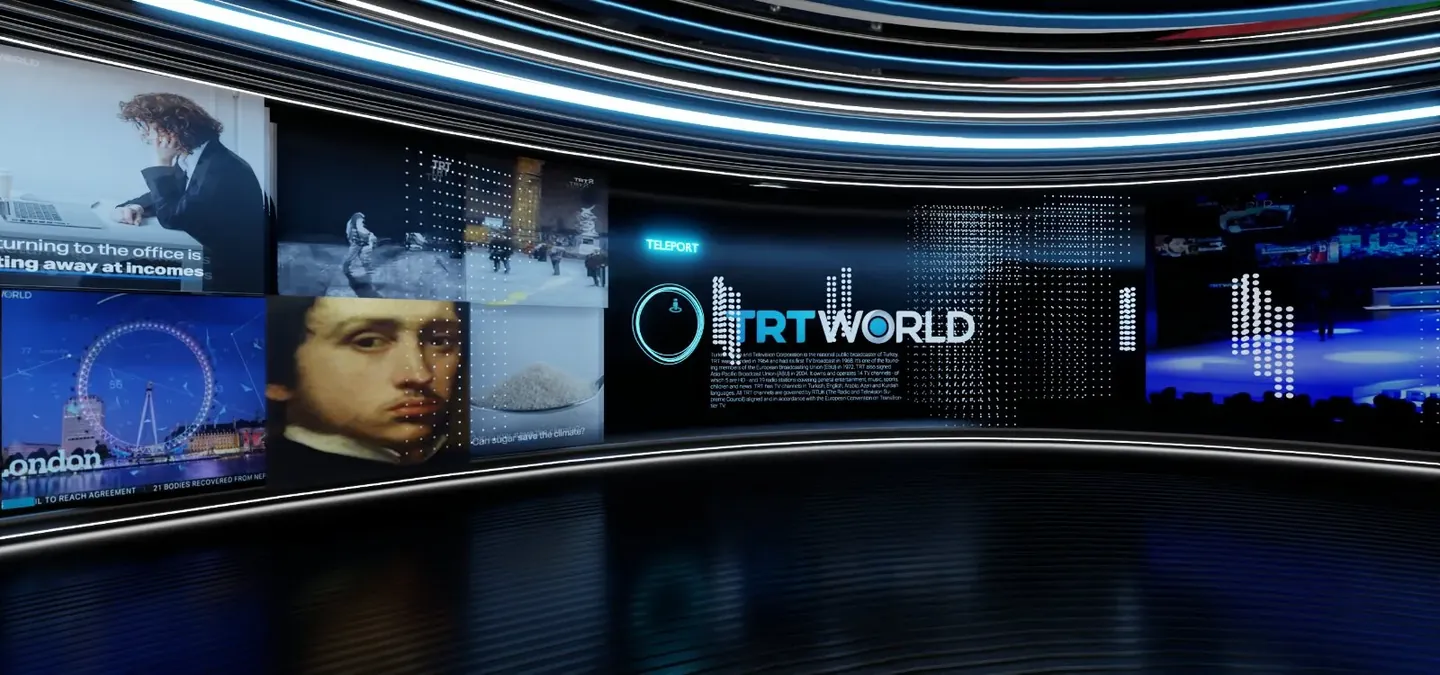
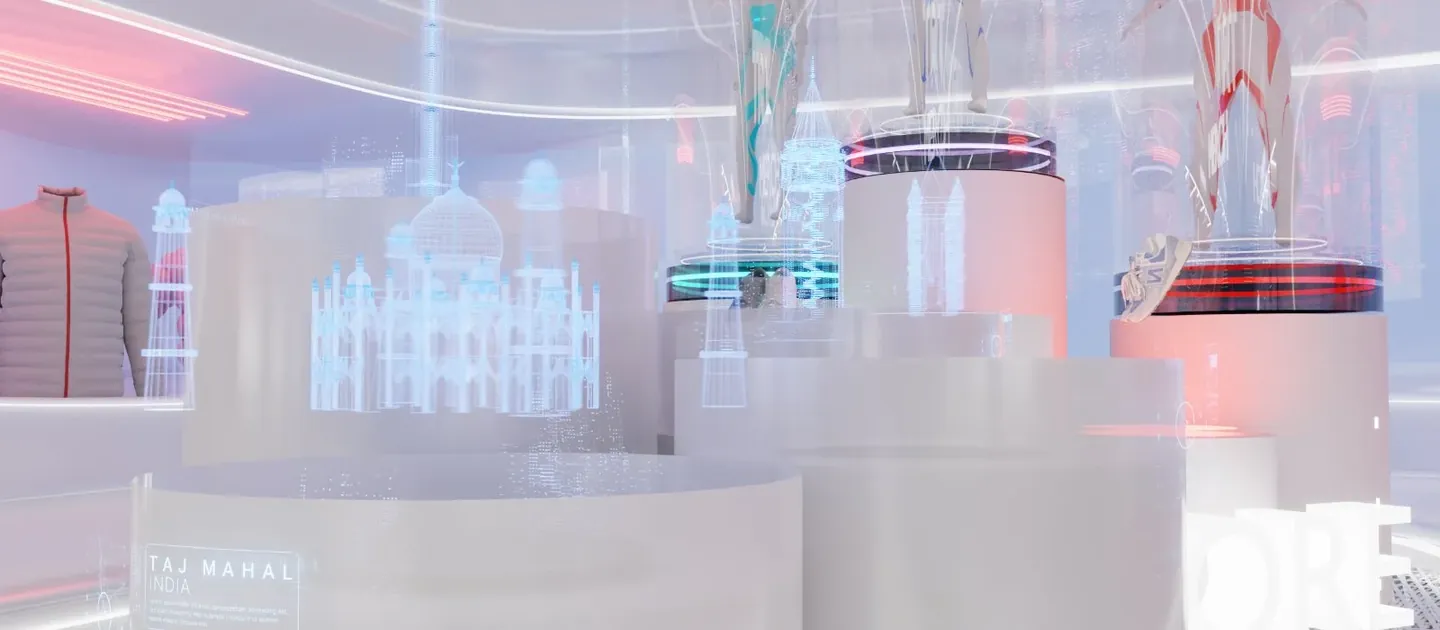
A foyer with a hanging wall, which is what a broadcaster’s cultural arm already has. In world the wall is not a wall: the exhibition can be re-hung between two broadcasts, in as many languages as there are channels.
TRT runs fourteen television channels and nineteen radio stations. A single environment could never speak for all of them, and a separate build for each would fragment the brand. So the main space was designed as a cell: it clones, it keeps its circulation logic, and each copy is retuned to the channel that occupies it.
Eight spaces from the same plan, each one a twin of what that channel already does and an extension of what it could. Click a channel to go in.
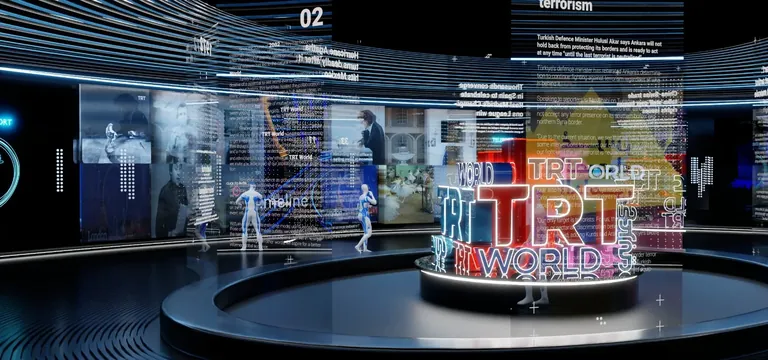
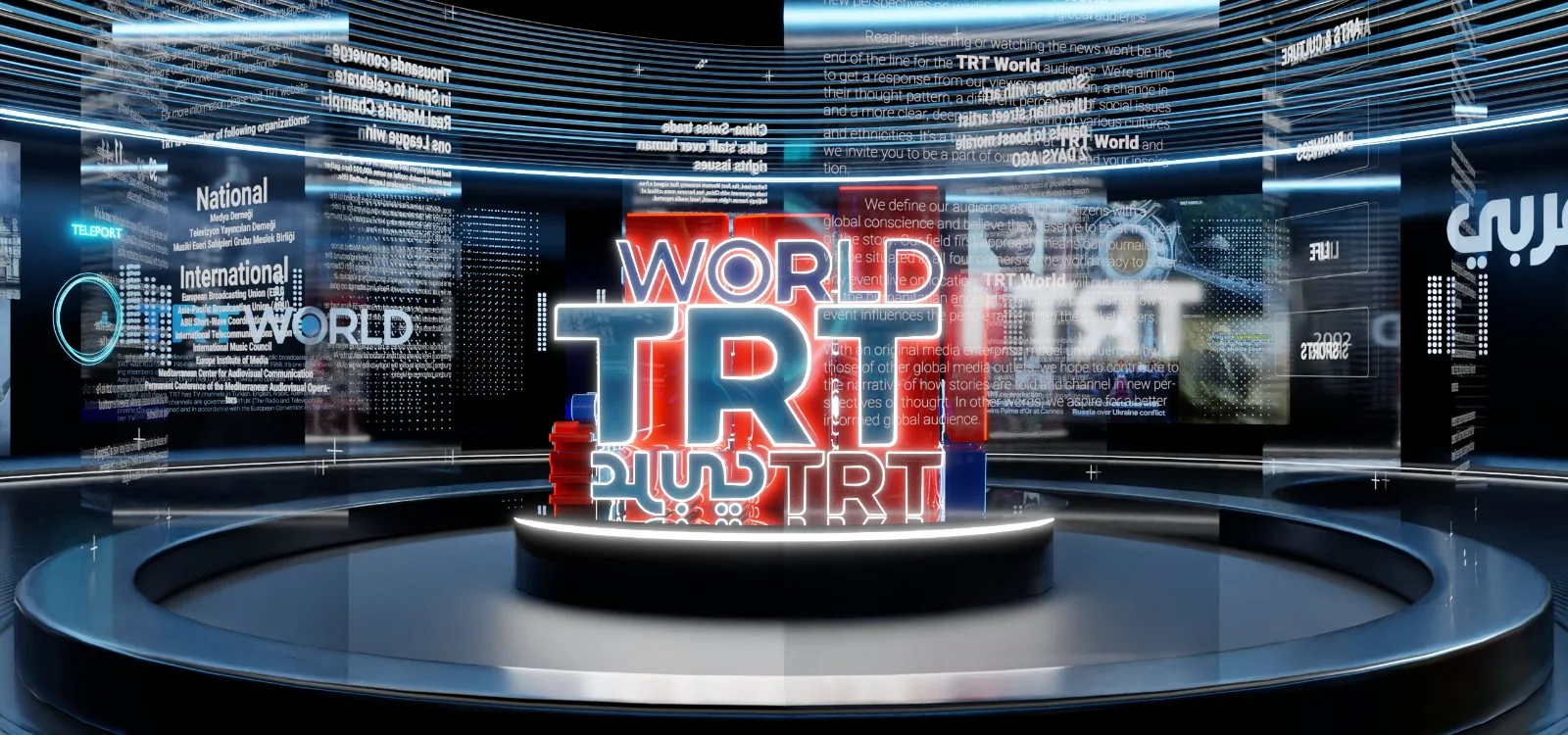
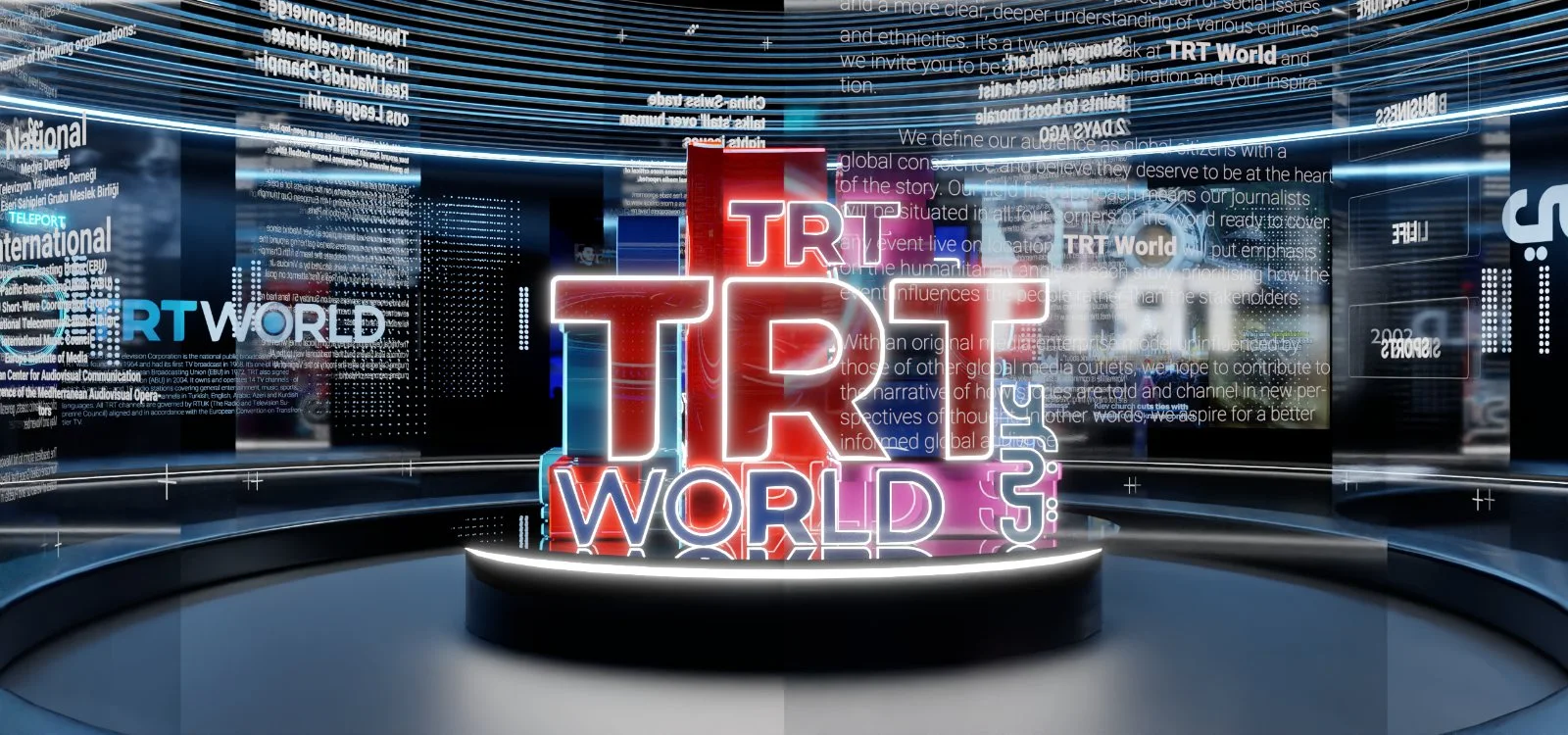
The flagship international channel takes the main space itself. A 360 broadcast floor where the running order is the architecture: live feeds wrap the walls, and the studio ring at the centre can hold an anchor and an audience in the same frame.
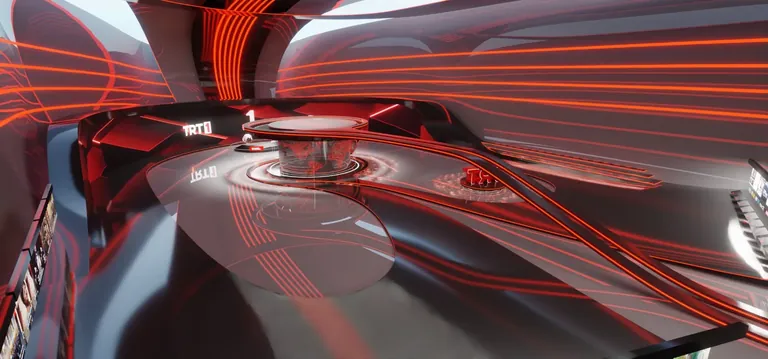
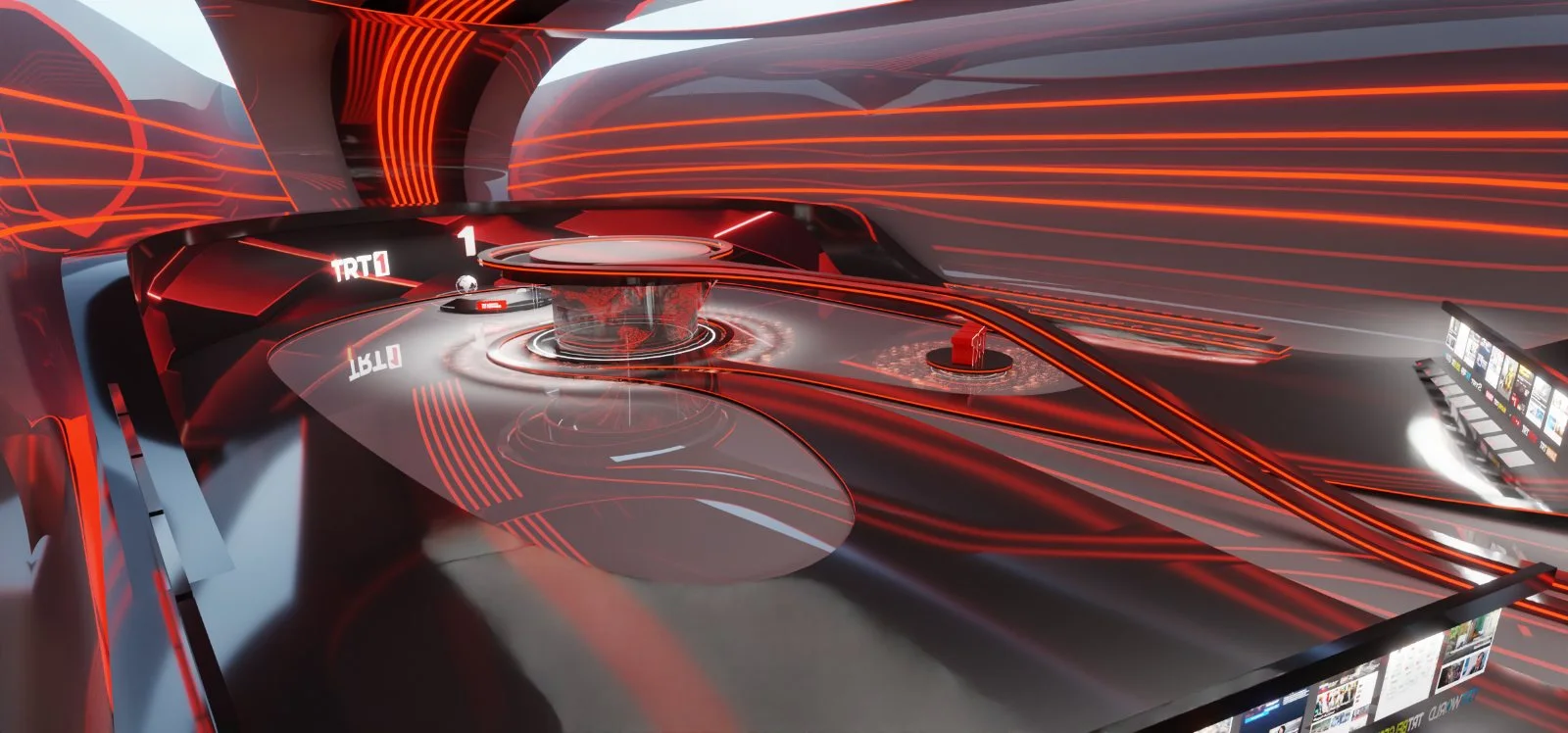
Haber inherits the broadcast geometry and recolours it. Every surface is a signal: the ribbing overhead reads as a waveform, the desk is a lit plinth, and the perimeter carries the wire in real time.
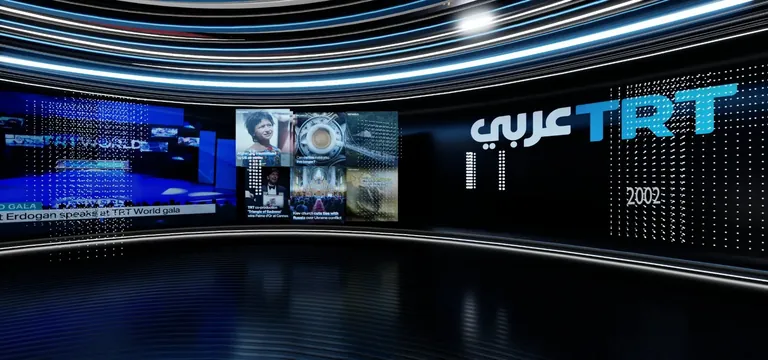
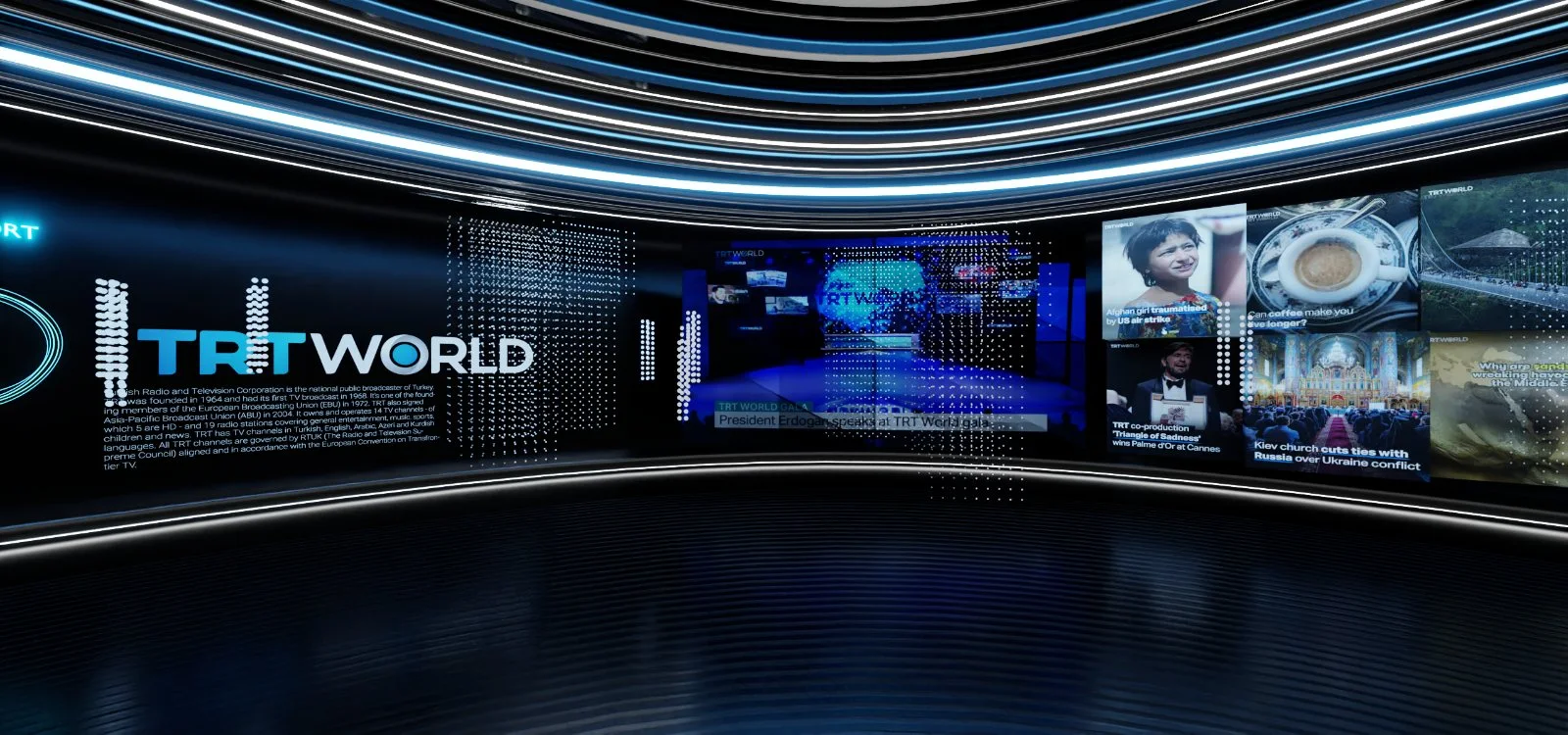
The same shell, mirrored. Circulation, screen order and seating all invert so the space reads in the direction its audience reads, which is the part a translated interface can never do.
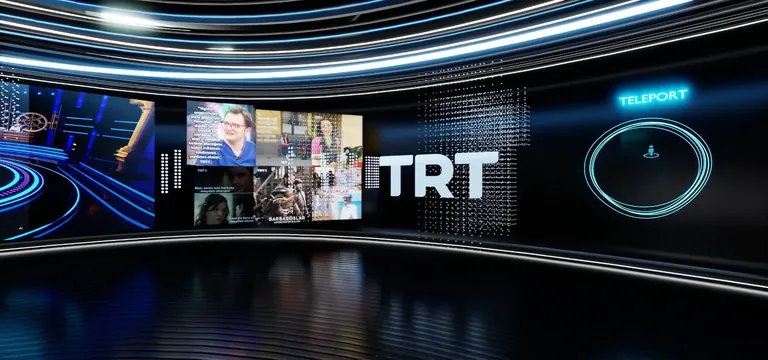
TRT 1 is where things launch. The space is built around an arrival: a long approach, a held threshold, then a room that opens for a first look at a series before it airs.
Culture and art get the quietest volume in the world. Light is indirect, the walls are hangable, and the programme is an exhibition that changes without a rebuild.
Sport needs a crowd, so the room is shaped like one. Tiered viewing around a central field of play, with the archive stacked underneath as a reel you can walk into.
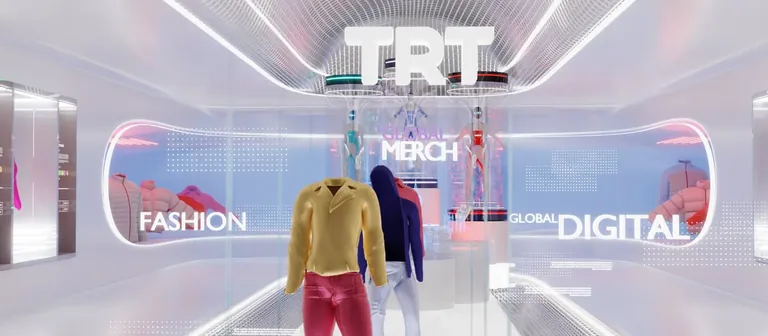
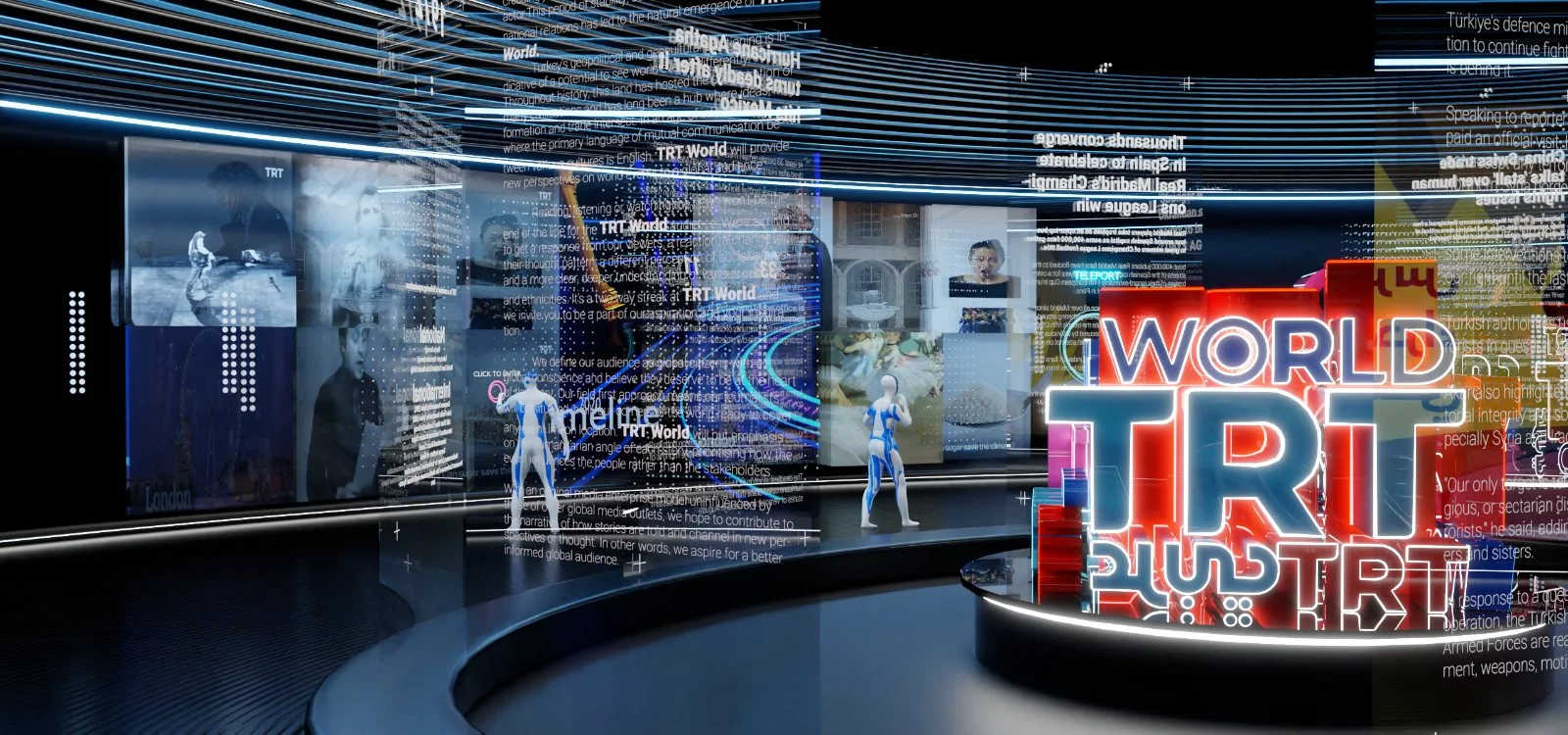
The children’s space is the only one where everything is meant to be picked up. Characters are objects, objects are toys, and the shop is a play area that happens to sell things.
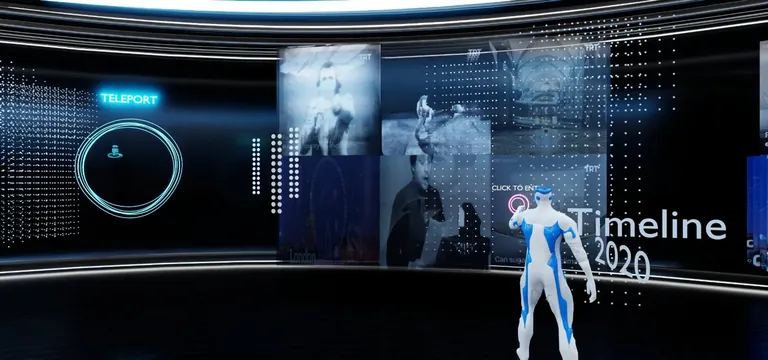
Documentary gets the horizon. The space opens outward instead of inward, so the subject of the film sits in the room with you at its own scale.
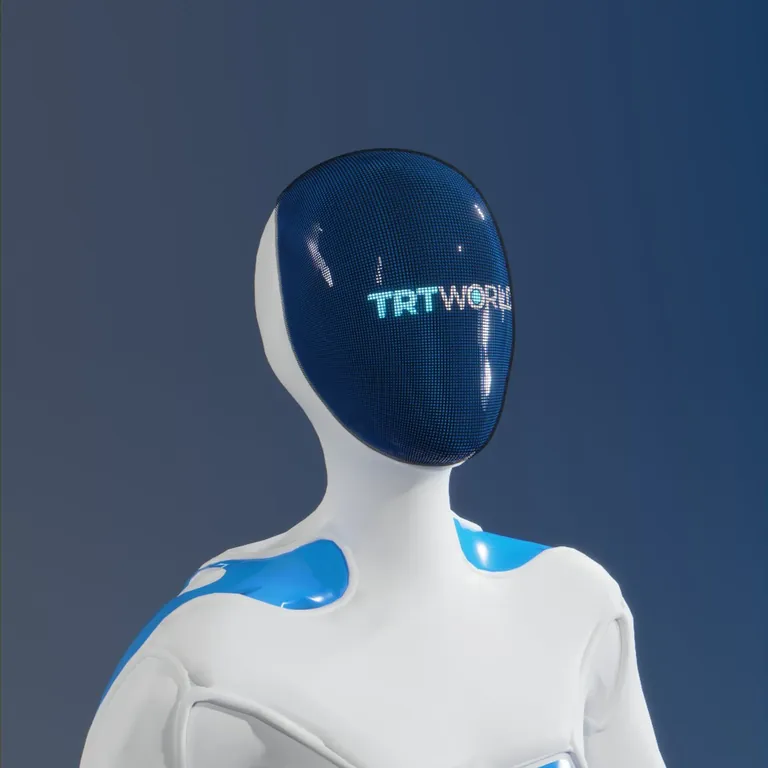
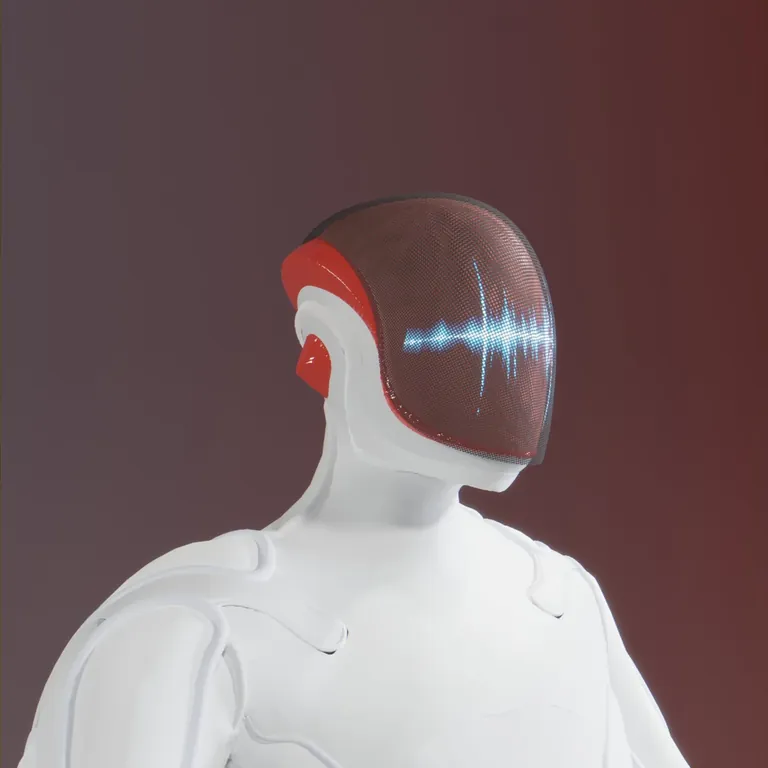
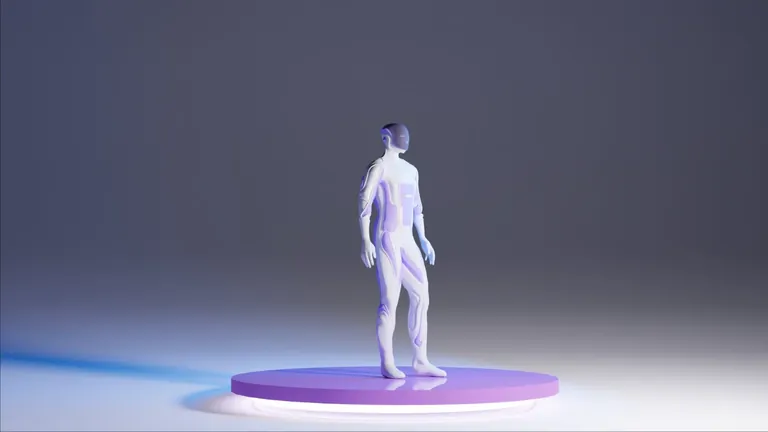
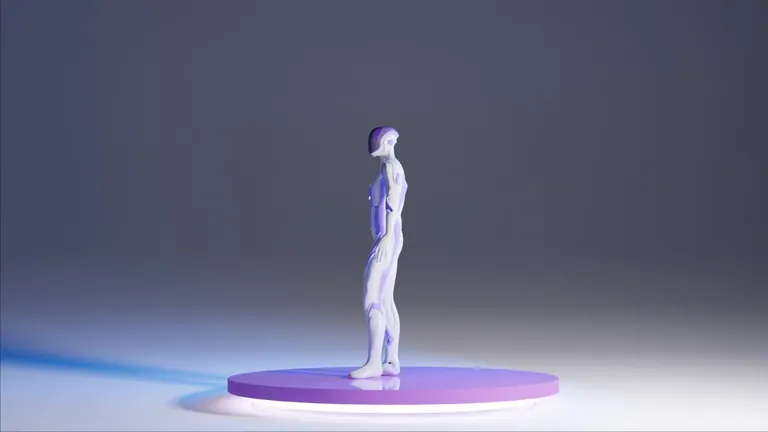
A broadcaster’s space is only as convincing as the people standing in it. ILLUSORR designed the avatar system alongside the architecture, so scale, silhouette and lighting were resolved together rather than borrowed from a marketplace.
“Groundbreaking and revolutionary.”
 ME Creative Technology AgencyIstanbul, Türkiye
